
Contamination Control Strategy Guide: Ampoules, Vials & Lyo (Annex 1 Compliant)
A step-by-step guide to implementing a compliant Contamination Control Strategy (CCS) for sterile injectable plants. Learn how to master Annex 1 requirements for ampoules, vials, and lyophilized products.
 Pharmaceutical Guideline4 min read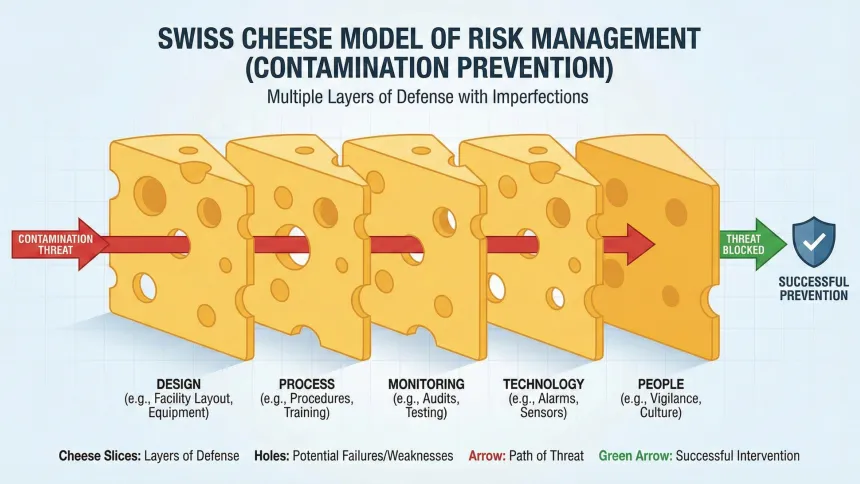

In the world of sterile manufacturing, the release of the 2022 revision of EU GMP Annex 1 marked the end of an era. The days of relying solely on end-product sterility testing are over. Today, the industry standard is proactive, holistic, and engineered: it is the Contamination Control Strategy (CCS).
For facility managers and quality heads running complex injectable plants—handling everything from glass ampoules to lyophilized vials—the CCS isn’t just a document. It is a living ecosystem of controls designed to ensure patient safety.
Whether you are retrofitting an existing line or designing a greenfield facility, here is your strategic roadmap to mastering the CCS.
1. The Paradigm Shift: From Monitoring to Control
Historically, if your environmental monitoring (EM) plates were clean and your sterility test passed, the batch was released. The new Annex 1 flips this logic. It acknowledges that sterility testing is statistically limited. You cannot “test quality into” a sterile product; you must design it in.
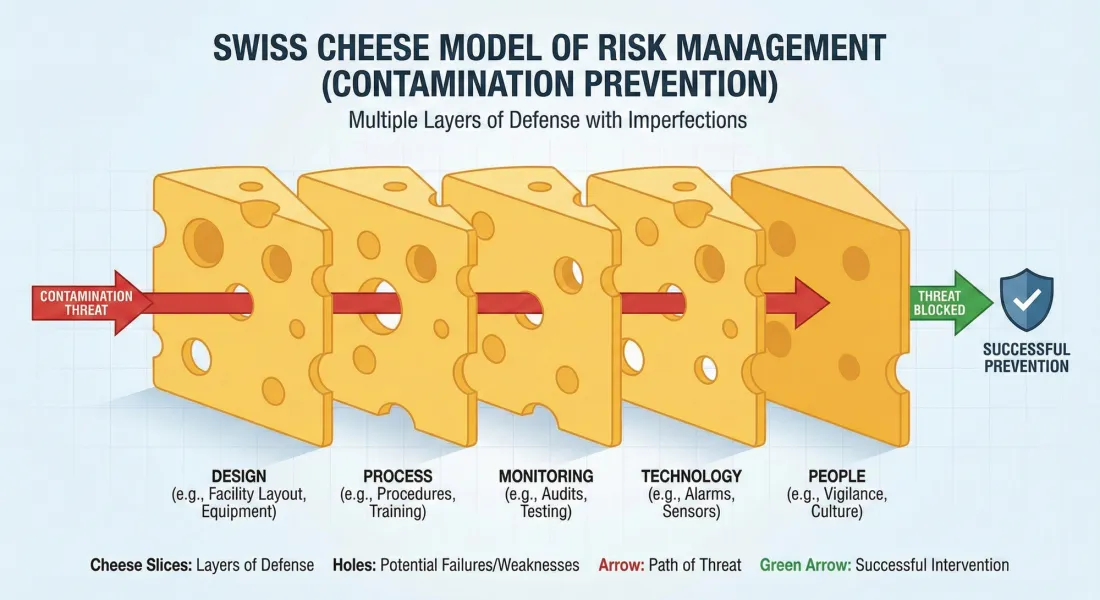
Your CCS must connect the dots. It links your facility design (HVAC), your equipment (Isolators), your procedures (gowning), and your utilities (WFI) into a single, cohesive narrative. If you are cleaning your drains, why are you using that specific sporicide? The CCS provides the scientific rationale based on your facility’s specific microbial flora.
2. The Engine of CCS (Contamination Control Strategy): Quality Risk Management (ICH Q9)
You cannot control what you do not understand. The core engine of your strategy is Quality Risk Management (QRM). This involves two critical tools:
- HACCP (Hazard Analysis and Critical Control Points): Use this for process steps. For example, the Depyrogenation Tunnel is a Critical Control Point (CCP). If the temperature drops, the hazard (pyrogens) is not eliminated.
- FMEA (Failure Mode and Effects Analysis): Use this for failure modes, especially human interaction. What happens if an operator’s glove tears? What if the stopper bowl stops vibrating? FMEA quantifies these risks so you can prioritize your budget on the highest risks.
3. Product-Specific Strategies
A “one-size-fits-all” strategy fails in a multi-format facility. You need distinct sub-strategies for each container type.
Ampoules: The Challenge of Fusion
Ampoules are hermetically sealed by melting glass, creating unique risks.
- The Risk: The high heat of flame sealing can char product splashes, creating “black spots” (carbonization). Furthermore, the opening and sealing process generates glass particulates.
- The Control: Your CCS must mandate100% High Voltage Leak Detection (HVLD) . Unlike dye ingress, which is probabilistic and messy, HVLD is deterministic and checks every single unit for micro-cracks.
- Glass Management: You need a strict protocol for glass breakage in the critical zone. If an ampoule shatters, does the line stop? How do you clear the shards without compromising sterility?
Liquid Vials: The Capping Dilemma
The 2022 Annex 1 brought strict new rules for vial capping.
- The Risk: Moving a stoppered vial from the aseptic core to the capping station involves risk. The stopper is in place, but it is not sealed until the aluminum crimp is applied.
- The Control: You must implement a**“Grade A Air Supply”** at the capping station. This isn’t just a fan; it’s HEPA-filtered air that meets Grade A particle counts at rest, protecting the vial until the seal is secure.
Lyophilization: The High-Risk Operation
Freeze-drying is arguably the most complex aseptic process.
- The Risk: Loading partially stoppered vials into the freeze-dryer is an “open” process. It is a massive contamination vector.
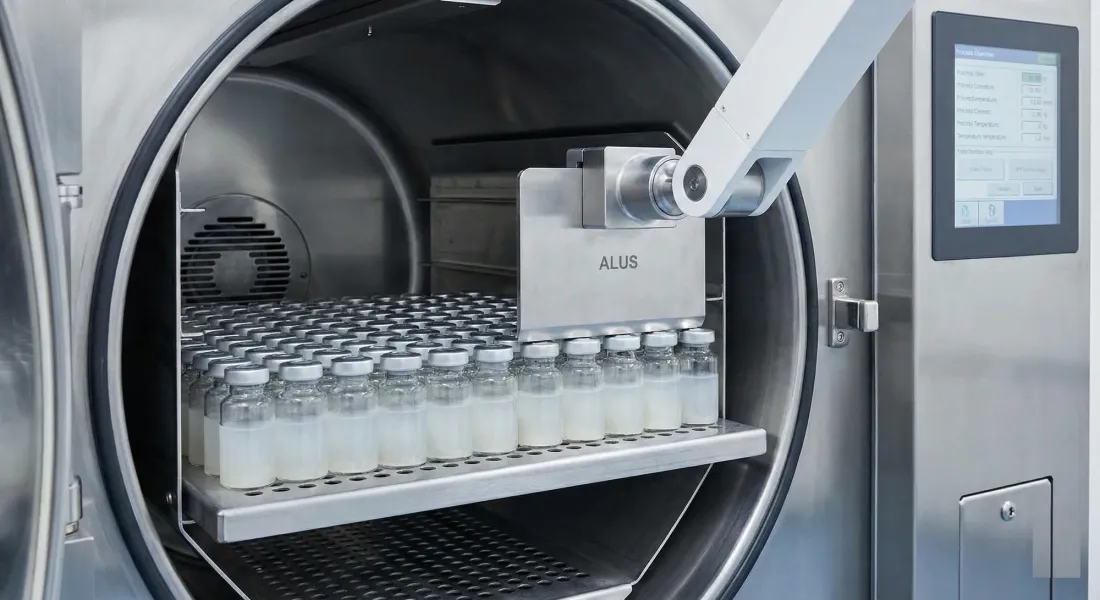
- The Control: Move towardALUS (Automatic Loading/Unloading Systems) . Removing the human from the loading process is the single most effective risk reduction you can implement.
- Hidden Dangers: Don’t forget the machinery. Vacuum pumps can backstream silicone oil vapor into the chamber, ruining the batch. Your CCS should include mass spectrometry monitoring to detect these molecular signatures.
4. Engineering Controls: RABS vs. Isolators
The new regulations heavily favor separation technology.
- Isolators: The gold standard. They allow you to operate in a Grade C/D background, use automated bio-decontamination (VHP), and practically eliminate human-borne contamination.
- RABS (Restricted Access Barrier Systems): A viable alternative for retrofits, but they require a Grade B background and stricter gowning controls.
- The Verdict: If you are building new, build Isolators. If you are upgrading, RABS can work, but your risk assessment must be ironclad.
5. Conclusion: A Living Document
Your Contamination Control Strategy is never “finished.” It is a living document that must evolve. An annual CCS review is essential to assess new trends—have your EM excursions increased? Has a new piece of gear introduced a new vibration risk?
By rigorously applying these principles, you do more than pass an audit. You build a fortress around your product, ensuring that every ampoule and vial leaving your plant is safe for the patient at the end of the line.
Get new articles
Practical GMP, QA and regulatory guidance for students and professionals, plus pharma job openings as they are posted. Free, about one email a week.