
DEIONIZED WATER
Deionized Water is produced by an ion-exchange process in which the cations & anions are replaced with H+ & OH− ions by use of ion-exchange
 Pharmaceutical Guideline1 min read
DEIONIZED WATER
- Deionized Water can be produced by starting with either Drinking Water orPurified Water , depending upon the monograph or testing procedures defined in the compendia.
- Deionized Water is produced by an ion-exchange process in which the cations and anions are replaced with H+ and OH− ions by use of ion-exchange resins.
- Similar to Distilled Water, Deionized Water is used primarily as a solvent for reagent preparation, but it is also specified in the execution of other aspects of tests, such as for transferring an analyte within a test procedure, as a calibration standard or analytical blank, and for test apparatus cleaning.
- Also, none of the cited uses of this water imply any needed purity attribute that can only be achieved by deionization.
- Therefore, water meeting the requirements for Purified Water that is derived by other means of purification could be equally suitable where Deionized Water is specified.
- It is the user’s responsibility to verify the suitability of Purified Water .
Get new articles
Practical GMP, QA and regulatory guidance for students and professionals, plus pharma job openings as they are posted. Free, about one email a week.
Related reading
 Pharmacopoeia
DISTILLED WATER
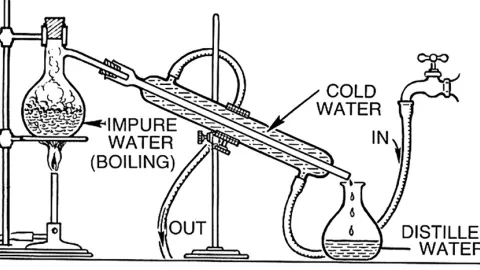
Distilled Water is produced by vaporizing Drinking Water or a higher quality of water and condensing it into a purer state.
 Pharmacopoeia
CARBON DIOXIDE-FREE WATER
Carbon dioxide-free water is defined in the Reagents, Indicators, and Solutions section of USP–NF as Purified Water that has been vigorously boiled for
 Pharmacopoeia
SOURCE WATER CONSIDERATIONS
Source water is the water that enters the facility. a minimum, drinking (potable) water standards as defined by the regulatory.