How to Reduce Human Error in Pharmaceutical Operations
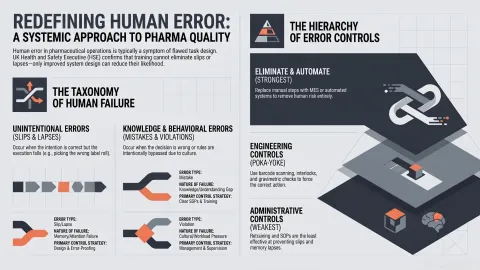
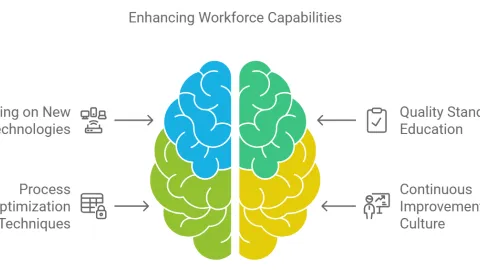
Why retraining alone rarely works, and the practical controls that reduce human error in pharmaceutical manufacturing, packaging and documentation.
Pharmaceutical regulatory reference
Pharmaceutical Guideline turns dense regulatory source material — ICH, PIC/S, 21 CFR, Schedule M, USP and Ph. Eur. — into articles you can actually use, whether you are studying for your first QA role or running a sterile facility.

Why retraining alone rarely works, and the practical controls that reduce human error in pharmaceutical manufacturing, packaging and documentation.
Fresh from the library
GeneralThe European Union is preparing for the most significant change in pharmaceutical regulation in over 20 years. On December 11, 2025, political agreement was reached on a new set of rules that will reshape how medicines for human use are developed, approved, and monitored across the EU. The final texts of a new regulation and directive were published in March 2026, marking a major overhaul of the EU pharma legislation framework.This update affects every stage of a medicine’s lifecycle, from early

In pharmaceutical manufacturing, maintaining the accuracy and reliability of data is not just a regulatory requirement - it is a cornerstone of patient safety and product quality. I have seen firsthand how lapses in data integrity can lead to costly recalls, regulatory actions, and most importantly, risks to public health. That is why I want to share practical insights on how to ensure pharmaceutical data integrity throughout the manufacturing process.Data integrity means that all data generated
GeneralSterile lab with shiny metal machinery, blue lighting, control panels, and empty glass vials on a conveyor. Modern and clean

Compliance in the pharmaceutical industry is not just a regulatory requirement; it is the backbone of ensuring patient safety, product quality, and trust in healthcare. As someone deeply involved in pharmaceutical manufacturing and quality assurance, I understand how complex and critical compliance can be. This post aims to clarify what compliance means in this sector, why it matters, and how to navigate the often intricate landscape of pharmaceutical regulations.Pharmaceutical compliance guidel

In the pharmaceutical industry, quality assurance is not just a goal - it is a necessity. Ensuring that every product meets strict safety and efficacy standards requires a deep understanding of pharmaceutical compliance guidelines. These guidelines serve as the backbone for manufacturing processes, regulatory submissions, and overall product integrity. Today, I want to walk you through the essentials of these guidelines, explain their importance, and share practical insights on how to implement

Navigating the complex world of pharmaceutical compliance can feel overwhelming. As someone deeply involved in pharmaceutical manufacturing and quality assurance, I understand how critical it is to stay updated with the latest guidelines. These rules ensure that products are safe, effective, and meet regulatory standards worldwide. In this post, I will break down essential pharmaceutical compliance guidelines, explain their importance, and offer practical advice to help you maintain compliance i
Browse the library
71 articles

Why retraining alone rarely works, and the practical controls that reduce human error in pharmaceutical manufacturing, packaging and documentation.

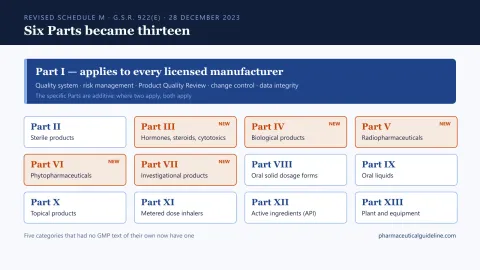
As of January 2026, the Indian pharma sector faces a massive bottleneck: over 13,000 plants require inspection, yet only ~1,100 field inspectors are active. While the government has enforced Revised Schedule M, Laghu Udhyog Bharti is pushing for a vital extension until December 2026 to prevent the closure of thousands of MSMEs and ensure the continued supply of affordable medicine.

Improving productivity & quality is critical to ensuring efficient operations, regulatory compliance & the delivery of high-quality products
60 articles

Why retraining alone rarely works, and the practical controls that reduce human error in pharmaceutical manufacturing, packaging and documentation.

Improving productivity & quality is critical to ensuring efficient operations, regulatory compliance & the delivery of high-quality products

5 Whys analysis is an essential tool for identifying the root causes of issues in the pharmaceutical industry
38 articles

European Pharmacopoeia (Ph. Eur.) 10th Edition has been obsolete since 1 January 2023. all previous versions are no longer been accessible.

Ph. Eur. Commission adopts revised general monographs 2034 and 2619 after inclusion of a new paragraph on control of N-nitrosamines

Pastes are semisolid preparations of stiff consistency and contain a high percentage 20%–50% of finely dispersed solids. Pastes are intended for
36 articles

The European Union is preparing for the most significant change in pharmaceutical regulation in over 20 years. On December 11, 2025, political agreement was reached on a new set of rules that will reshape how medicines for human use are developed, approved, and monitored across the EU. The final texts of a new regulation and directive were published in March 2026, marking a major overhaul of the EU pharma legislation framework.This update affects every stage of a medicine’s lifecycle, from early

Sterile lab with shiny metal machinery, blue lighting, control panels, and empty glass vials on a conveyor. Modern and clean

As of January 2026, the Indian pharma sector faces a massive bottleneck: over 13,000 plants require inspection, yet only ~1,100 field inspectors are active. While the government has enforced Revised Schedule M, Laghu Udhyog Bharti is pushing for a vital extension until December 2026 to prevent the closure of thousands of MSMEs and ensure the continued supply of affordable medicine.
Browse by subject across all 28 main topics.